
Why your Philly basement feels like a swamp in July and how to fix it
Your basement feels like a sauna not because you’re imagining it. Philadelphia summers pack a humidity punch that turns historic row home foundations into moisture traps. The combination of 90-degree heat, 70% relative humidity, and century-old stone and brick foundations creates the perfect storm for basement dampness. This isn’t just uncomfortable. It’s a health hazard that can lead to mold growth, wood rot, and structural damage if left unchecked. Water Damage Restoration Allentown.
Why Philadelphia basements are prone to summer humidity
Philadelphia’s unique building stock and climate create conditions that make basement humidity worse than in other cities. The ‘stack effect’ pulls warm, moist air from your basement up through your home all summer long. Older row homes with shared walls and limited airflow trap humidity. Local clay-heavy soils hold water against foundation walls after heavy rains, and the city’s combined sewer system can back up during storms, adding to the moisture load. Finding the Best Water Damage Restoration Company in Center City Without Getting Scammed.
Philadelphia’s ‘Urban Heat Island’ effect means city neighborhoods stay warmer overnight in July and August. This prevents the natural cooling that would help basements dry out. Stone and brick foundations common in areas like Fishtown and South Philly are porous. They wick moisture from the surrounding soil, especially when the ground is saturated after summer thunderstorms.. Read more about Identifying moisture problems in the unique limestone foundations of Swarthmore homes.
Identifying the source: condensation vs water intrusion
Before you buy a dehumidifier, you need to know what you’re dealing with. Condensation forms when warm, humid air hits cool basement surfaces. You’ll see water droplets on pipes, windows, and cold concrete walls. Water intrusion happens when groundwater or surface water enters through cracks, joints, or porous materials. Water Damage Restoration Reading.
Here’s a simple test: tape a square foot of clear plastic sheeting to your basement wall or floor. Seal all edges with duct tape. Wait 48 hours. If moisture appears on top of the plastic, you have condensation. If moisture appears underneath against the wall, you have water intrusion.. Read more about Detecting a leak in the main water service line under your lawn in Abington.
Look for efflorescence, a white powdery substance on brick or stone. This is mineral salt left behind when water evaporates through masonry. It’s a sign of chronic moisture wicking through your foundation. Mold growth, on the other hand, appears as black, green, or white fuzzy patches and indicates high humidity over time.. Read more about That white powdery stuff on your Port Richmond basement walls and why it matters.
Health and property risks of ignoring high humidity
High basement humidity creates more than discomfort. The EPA recommends keeping indoor relative humidity below 60% to prevent mold growth. In Philadelphia’s summer climate, basements often reach 70-80% RH without intervention. EPA mold guidelines.
Mold spores thrive in these conditions. Once established, mold can spread through your HVAC system to living spaces above. Black mold, while less common than media reports suggest, can produce mycotoxins that cause respiratory issues, especially in children and the elderly.
Beyond health concerns, sustained high humidity causes wood rot in floor joists and sill plates. It corrodes metal fasteners and electrical components. Your HVAC system works harder to cool moist air, increasing energy bills. Books, documents, and stored items absorb moisture and deteriorate.
5 immediate steps to reduce basement humidity
Start with these proven tactics before considering professional help. These steps address the most common causes of basement humidity in Philadelphia homes.
- Check and extend downspouts. Ensure all downspouts direct water at least 6 feet away from your foundation. In Philadelphia’s older neighborhoods, downspouts often empty directly against foundation walls.
- Grade soil away from the house. The ground should slope away from your foundation for at least 10 feet. This prevents surface water from pooling against basement walls.
- Seal visible cracks. Use hydraulic cement for active leaks and masonry caulk for hairline cracks. Pay special attention to where walls meet floors.
- Install a dehumidifier. For Philadelphia summers, choose a unit rated for at least 50-70 pints per day. Set it to maintain 50-55% relative humidity. Empty the collection bucket regularly or connect it to a drain.
- Improve ventilation. If your basement has windows, open them when outside humidity drops below indoor levels, typically early morning or late evening. Use exhaust fans to move moist air out.
When to call a Philadelphia water damage professional
Some humidity problems require professional equipment and expertise. Call a certified water damage restoration company if you notice these warning signs.
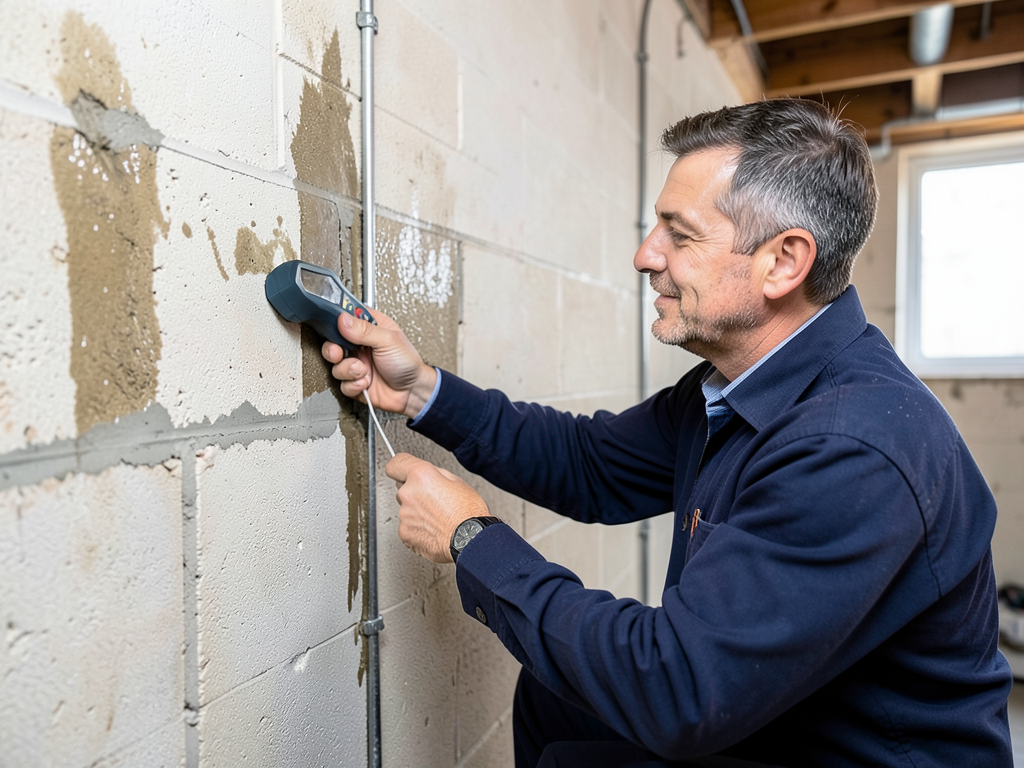
Standing water or active leaks indicate a serious drainage or plumbing issue. A professional can identify the source using moisture meters and thermal imaging cameras that detect hidden water behind walls.
Black mold covering more than 10 square feet requires professional remediation following IICRC S520 standards. Disturbing large mold areas without proper containment releases spores throughout your home.
Musty odors that persist after dehumidification suggest hidden moisture in wall cavities or under flooring. Professionals use penetrating moisture meters to find these problems.
Efflorescence covering large wall areas indicates chronic moisture wicking that simple crack sealing won’t fix. You may need exterior waterproofing or interior drainage systems.
High humidity despite running a dehumidifier suggests either an oversized moisture source or an undersized dehumidifier for your space. A professional can calculate the exact capacity needed based on your basement’s cubic footage and local climate conditions.
Professional solutions for persistent basement humidity
Professional water damage restoration companies offer solutions that go beyond retail products. These systems address the root causes of basement humidity specific to Philadelphia’s climate and building stock.
Interior French drain systems collect water from around your foundation and direct it to a sump pump. This is particularly effective in areas with high clay content like much of the Philadelphia region where water tables rise during wet seasons.
Exterior waterproofing membranes create a barrier on the outside of foundation walls. This prevents water from ever reaching your basement, though it requires excavation around your home.
Professional-grade dehumidification uses desiccant or low-grain refrigerant (LGR) units that remove more moisture per kilowatt-hour than standard retail units. These are essential for large basements or severe humidity problems.
Air exchange systems bring in filtered outdoor air when conditions are favorable, then condition it before introducing it to your basement. This maintains positive pressure that helps keep moist outdoor air from infiltrating.
Cost considerations for Philadelphia homeowners
DIY solutions like dehumidifiers and crack sealing cost $200-800. Professional interior drainage systems range from $3,000-8,000 depending on basement size and complexity. Exterior waterproofing typically costs $8,000-15,000 since it requires excavation.
Many Philadelphia homeowners find that addressing humidity early prevents much costlier mold remediation or structural repairs later. A $5,000 waterproofing system can prevent $20,000-30,000 in mold damage and wood replacement. How Manayunk Homeowners Can Recover Fast After Schuylkill River Flooding.
Check if your homeowner’s insurance covers sudden water damage from burst pipes or appliance failures. However, gradual moisture problems from poor drainage or high humidity are typically not covered.
Preventing future humidity problems
Once you’ve addressed your immediate humidity issues, take these steps to prevent recurrence. Philadelphia’s climate means you’ll need to stay vigilant, especially during the peak summer months of July and August.
Annual maintenance of your sump pump ensures it works when you need it. Test it every spring before the rainy season. Clean debris from window wells and ensure covers fit properly.
Monitor humidity levels with a hygrometer. Digital units that track highs and lows help you spot developing problems before they become visible.
Address plumbing leaks promptly. Even small drips add significant moisture to basement air over time. Check under sinks, around water heaters, and near washing machine connections monthly.
Consider a whole-house approach. Your basement humidity affects the entire home through the stack effect. Proper attic ventilation, bathroom exhaust fans, and kitchen range hoods all contribute to overall moisture control.
Philadelphia’s unique combination of historic architecture, humid summers, and aging infrastructure makes basement humidity a common challenge. Understanding the specific causes in your home allows you to choose the right solution, whether that’s a simple dehumidifier or a comprehensive waterproofing system.. Read more about Protecting hand-carved historic woodwork in your Germantown home from high humidity.
Frequently Asked Questions
How do I know if my dehumidifier is big enough for my Philadelphia basement?
A dehumidifier should maintain 50-55% relative humidity in your basement during summer. If humidity stays above 60% despite running the unit continuously, you need a larger capacity or additional units. For Philadelphia basements, choose units rated for at least 50-70 pints per day.
Can I use a regular household dehumidifier in my basement?
Standard household dehumidifiers work for small basements under 1,000 square feet with moderate humidity. For larger spaces or severe humidity, you need a unit specifically designed for basements. These have better condensate pumps, can operate at lower temperatures, and remove more moisture per energy dollar.
How long does it take to dry out a damp Philadelphia basement?
With proper dehumidification and moisture source control, you should see improvement within 24-48 hours. Complete drying of materials like concrete can take 2-3 weeks. If humidity remains high after two weeks of continuous dehumidification, you likely have an unresolved moisture source requiring professional diagnosis.
Is basement humidity worse in certain Philadelphia neighborhoods?
Yes. Areas with older housing stock like South Philly, Fishtown, and parts of West Philadelphia often have more humidity issues due to aging foundations and shared walls. Neighborhoods near the Schuylkill or Delaware Rivers may experience higher groundwater levels. Row homes generally trap more humidity than detached houses.
Will a vapor barrier on my basement floor help with humidity?
A vapor barrier can reduce moisture coming through concrete slabs, which is often a significant source of basement humidity. However, it won’t address moisture entering through walls or from the air. For comprehensive humidity control, combine vapor barriers with dehumidification and proper drainage.
Don’t let another Philadelphia summer turn your basement into a swamp. The longer you wait, the more damage high humidity causes to your home and health. Call (215) 610-8188 today to schedule your inspection. Our certified technicians will diagnose your specific moisture problems and recommend proven solutions that work in Philadelphia’s unique climate. Pick up the phone and call (215) 610-8188 before the next storm hits. For more information, visit IICRC S500 and S520 standards.
You may also find this helpful. Why your child’s mystery cough might be linked to dampness in your West Mount Airy home.
You may also find this helpful. The hidden danger of a leaking whole-house humidifier in your Jenkintown basement.
You may also find this helpful. Choosing the right sump pump for your Lansdale basement (pedestal vs submersible).
You may also find this helpful. The truth about mold growth in Willow Grove crawl spaces and how to stop it.
{
“@context”: “https://schema.org”,
“@type”: “BlogPosting”,
“headline”: “Why your Philly basement feels like a swamp in July and how to fix it”,
“description”: “Philadelphia basements get unbearably humid in July. Learn why local row homes trap moisture and the proven fixes from Philly water damage pros.”,
“wordCount”: 1693,
“datePublished”: “2026-05-31T11:59:00.000Z”,
“dateModified”: “2026-05-31T11:59:00.000Z”,
“inLanguage”: “en-US”,
“mainEntityOfPage”: {
“@type”: “WebPage”,
“@id”: “https://reliancewaterdamagerestorationphiladelphia.com”
},
“publisher”: {
“@type”: “LocalBusiness”,
“name”: “Reliance Water Damage Restoration Philadelphia”,
“url”: “https://reliancewaterdamagerestorationphiladelphia.com”
},
“author”: {
“@type”: “Organization”,
“name”: “Reliance Water Damage Restoration Philadelphia”,
“url”: “https://reliancewaterdamagerestorationphiladelphia.com”
},
“image”: {
“@type”: “ImageObject”,
“url”: “https://reliancewaterdamagerestorationphiladelphia.com/wp-content/uploads/2026/03/why-your-philly-basement-feels-like-a-swamp-in-jul-1.png”
}
}
{
“@context”: “https://schema.org”,
“@type”: “LocalBusiness”,
“name”: “Reliance Water Damage Restoration Philadelphia”,
“url”: “https://reliancewaterdamagerestorationphiladelphia.com”,
“address”: {
“@type”: “PostalAddress”,
“addressLocality”: “Philadelphia”
},
“areaServed”: {
“@type”: “City”,
“name”: “Philadelphia”
}
}
{
“@context”: “https://schema.org”,
“@type”: “FAQPage”,
“mainEntity”: [
{
“@type”: “Question”,
“name”: “How do I know if my dehumidifier is big enough for my Philadelphia basement?”,
“acceptedAnswer”: {
“@type”: “Answer”,
“text”: “A dehumidifier should maintain 50-55% relative humidity in your basement during summer. If humidity stays above 60% despite running the unit continuously, you need a larger capacity or additional units. For Philadelphia basements, choose units rated for at least 50-70 pints per day.”
}
},
{
“@type”: “Question”,
“name”: “Can I use a regular household dehumidifier in my basement?”,
“acceptedAnswer”: {
“@type”: “Answer”,
“text”: “Standard household dehumidifiers work for small basements under 1,000 square feet with moderate humidity. For larger spaces or severe humidity, you need a unit specifically designed for basements. These have better condensate pumps, can operate at lower temperatures, and remove more moisture per energy dollar.”
}
},
{
“@type”: “Question”,
“name”: “How long does it take to dry out a damp Philadelphia basement?”,
“acceptedAnswer”: {
“@type”: “Answer”,
“text”: “With proper dehumidification and moisture source control, you should see improvement within 24-48 hours. Complete drying of materials like concrete can take 2-3 weeks. If humidity remains high after two weeks of continuous dehumidification, you likely have an unresolved moisture source requiring professional diagnosis.”
}
},
{
“@type”: “Question”,
“name”: “Is basement humidity worse in certain Philadelphia neighborhoods?”,
“acceptedAnswer”: {
“@type”: “Answer”,
“text”: “Yes. Areas with older housing stock like South Philly, Fishtown, and parts of West Philadelphia often have more humidity issues due to aging foundations and shared walls. Neighborhoods near the Schuylkill or Delaware Rivers may experience higher groundwater levels. Row homes generally trap more humidity than detached houses.”
}
},
{
“@type”: “Question”,
“name”: “Will a vapor barrier on my basement floor help with humidity?”,
“acceptedAnswer”: {
“@type”: “Answer”,
“text”: “A vapor barrier can reduce moisture coming through concrete slabs, which is often a significant source of basement humidity. However, it won’t address moisture entering through walls or from the air. For comprehensive humidity control, combine vapor barriers with dehumidification and proper drainage.”
}
}
]
}
{
“@context”: “https://schema.org”,
“@type”: “BreadcrumbList”,
“itemListElement”: [
{
“@type”: “ListItem”,
“position”: 1,
“name”: “Home”,
“item”: “https://reliancewaterdamagerestorationphiladelphia.com”
},
{
“@type”: “ListItem”,
“position”: 2,
“name”: “Blog”,
“item”: “https://reliancewaterdamagerestorationphiladelphia.com/blog”
},
{
“@type”: “ListItem”,
“position”: 3,
“name”: “Why your Philly basement feels like a swamp in July and how to fix it”
}
]
}
{
“@context”: “https://schema.org”,
“@type”: “Service”,
“serviceType”: “Water Damage Restoration”,
“provider”: {
“@type”: “LocalBusiness”,
“name”: “Reliance Water Damage Restoration Philadelphia”,
“url”: “https://reliancewaterdamagerestorationphiladelphia.com”
},
“areaServed”: {
“@type”: “City”,
“name”: “Philadelphia”
},
“description”: “Philadelphia basements get unbearably humid in July. Learn why local row homes trap moisture and the proven fixes from Philly water damage pros.”
}