menu

Water Stains on Drywall in Philadelphia – Expert Diagnosis and Permanent Repair

We identify the hidden moisture source behind brown water spots on walls, yellow stains on drywall, and ceiling discoloration, then fix the problem correctly the first time so you avoid mold growth and recurring damage.

Slider Image 1
Slider Image 2
Slider Image 3
Slider Image 4
Slider Image 5
Slider Image 7
Slider Image 8
Slider Image 9
Slider Image 10
Slider Image 11

Why Water Stains Appear on Philadelphia Walls and What They Really Mean

You notice a brown water spot spreading across your living room ceiling. Maybe it started small, just a faint yellow ring near the corner. Now it has grown into a patch the size of a dinner plate, and the sheetrock feels soft when you press against it.

Philadelphia's freeze-thaw cycles make this problem worse. Water infiltrates through roof valleys or around corroded flashing during winter storms, then migrates through insulation and saturates the drywall. When temperatures rise, that trapped moisture creates the perfect environment for mold spores to colonize behind the surface. You see the stain. The real damage hides inside the wall cavity.

Moisture discoloration on sheetrock does not appear randomly. Every wet patch on plasterboard points to an active leak or chronic condensation issue. In older Philadelphia rowhomes and twins, the problem often starts with deteriorated mortar joints between shared walls or failed window flashing around original wooden frames. In newer construction, it traces back to improperly sealed bathroom pan liners or HVAC condensate line failures inside interior walls.

Water marks on ceiling panels signal overhead plumbing leaks, roof penetrations, or attic condensation dripping onto insulation. The stain you see today started weeks ago. By the time discoloration becomes visible, the drywall has already absorbed enough water to compromise its structural integrity. The paper facing delaminates. Fasteners lose holding strength. The gypsum core begins to crumble.

You cannot paint over water stains and call it fixed. You must identify the source, stop the water intrusion, remove contaminated materials, and rebuild with proper moisture barriers.

Why Water Stains Appear on Philadelphia Walls and What They Really Mean
How We Trace Water Intrusion and Restore Drywall Integrity

How We Trace Water Intrusion and Restore Drywall Integrity

We do not patch over symptoms. We find the source.

Our process starts with thermal imaging cameras that detect temperature differentials behind finished surfaces. Wet building materials show cooler than dry materials. This lets us map the full extent of saturation without cutting exploratory holes in every wall. We also use pin-type and pinless moisture meters calibrated for gypsum sheetrock to measure water content percentages at multiple depths.

Once we map the affected area, we trace the water path backward. If you have brown water spots on walls in a second-floor bedroom, we inspect the attic above for roof leaks, check the bathroom on the third floor for shower pan failures, and examine exterior walls for failed caulking around windows. Water follows gravity and capillary action. It travels along studs, through wire penetrations, and across the top plates of wall frames before it finally soaks through drywall and becomes visible.

After we locate and stop the source, we remove all compromised sheetrock. Drywall that has been saturated for more than 48 hours requires removal. The paper facing holds mold spores. The gypsum core loses fire rating and structural integrity. We cut back to dry material, typically 12 inches beyond the visible stain line, to ensure complete removal of affected substrate.

We then dry the wall cavity using commercial dehumidifiers and air movers. Studs, insulation, and subfloor must reach equilibrium moisture content before we install new drywall. We verify dryness with meter readings below 15 percent moisture content. Then we install mold-resistant sheetrock, tape and finish seams to Level 4 standards, prime with stain-blocking sealer, and match your existing texture.

What Happens During Your Drywall Water Damage Assessment

Water Stains on Drywall in Philadelphia – Expert Diagnosis and Permanent Repair
01

Initial Damage Inspection

We photograph all visible water marks on ceiling surfaces and wall discoloration, then use moisture detection equipment to scan adjacent areas. Most water stains indicate damage extending 18 to 36 inches beyond what you can see. We map moisture levels in floors, ceilings, and surrounding walls to determine the full scope before we begin containment and drying.
02

Source Identification and Containment

We trace the leak origin by inspecting plumbing lines, roof penetrations, exterior wall assemblies, and HVAC systems in the areas above and adjacent to the stained drywall. Once we confirm the source, we stop active water intrusion immediately. This may involve emergency plumbing repairs, roof tarping, or isolating failed fixtures. Containment prevents additional saturation while we prepare for material removal and drying.
03

Removal, Drying, and Reconstruction

We remove all wet sheetrock and damaged insulation, then dry the wall cavity to verified moisture levels below 15 percent using industrial dehumidifiers and air movers. After confirming dryness with meter readings, we rebuild with mold-resistant drywall, finish seams to match existing texture, apply stain-blocking primer, and repaint to match your original wall color. The repaired section integrates seamlessly with surrounding surfaces.

Why Philadelphia Homeowners Trust Local Water Damage Expertise

Philadelphia's housing stock presents specific challenges that out-of-town contractors miss. If you own a rowhome built before 1950, your walls likely contain plaster over wood lath, not drywall. Water damage in these structures requires different removal techniques to avoid collapsing adjacent plaster sections. The shared party walls between units also complicate moisture intrusion. A leak on your neighbor's side can migrate through the common wall and create yellow stains on drywall in your home.

We understand how Philadelphia's municipal water system affects your plumbing. The city's aggressive water chemistry corrodes copper pipes faster than in other regions. Pinhole leaks develop in walls without visible exterior symptoms until water saturates the drywall. We know to check copper supply lines inside walls when we see unexplained moisture discoloration on sheetrock, even when no fixtures show active dripping.

Local building codes also dictate how we rebuild after water damage. Philadelphia requires permits for structural drywall removal exceeding 48 square feet. We handle permit applications, inspections, and code compliance so you avoid violations that complicate future home sales. We also coordinate with your insurance adjuster to document pre-loss conditions and justify full replacement of damaged materials rather than surface repairs.

Our familiarity with Philadelphia's neighborhood-specific construction styles helps us match your existing finishes. Center City condos built in the 1980s typically have smooth Level 5 drywall finishes. Northeast Philadelphia twins from the 1960s usually show orange peel or knockdown textures. We match your original finish so repaired sections blend invisibly with surrounding walls. You cannot tell where the damage occurred after we complete reconstruction.

Reliance Water Damage Restoration Philadelphia has worked in your neighborhood. We know your building type, your plumbing risks, and your code requirements. We fix it right.

What You Can Expect During Water Stain Repair

Response Time and Scheduling

We respond to water damage calls within two hours during business hours and within four hours for after-hours emergencies. Active leaks require immediate containment to prevent additional saturation. For non-emergency stain diagnosis and repair, we schedule inspections within 24 hours of your call. Most residential drywall water damage projects take three to five days from initial assessment through final paint application, depending on drying time requirements and the extent of material removal. We provide daily updates and adjust schedules if drying conditions require extended dehumidification.

Inspection and Moisture Assessment

Our initial inspection includes thermal imaging of all walls and ceilings adjacent to visible staining, moisture meter readings at multiple depths within affected drywall, and source tracing to identify the water entry point. We document findings with photos and moisture maps that show saturation levels throughout the damaged area. You receive a written assessment explaining what caused the staining, how far the moisture has spread, and what materials require removal versus drying in place. This assessment forms the basis for insurance claims and repair proposals. We answer questions about mold risk, structural concerns, and timeline expectations before we begin any work.

Final Appearance and Integration

Repaired drywall sections match your existing wall texture, paint sheen, and finish quality. We use stain-blocking primers that prevent tannins and residual discoloration from bleeding through new paint. Seams between new and existing drywall receive multi-coat finishing with progressively wider joint compound feathering to eliminate visible transitions. We sand to smooth, dust-free surfaces before priming and painting. If your walls show age-related yellowing or fading, we blend paint across entire wall sections rather than spot-painting only the repair area. The goal is invisible integration. You should not be able to identify where water damage occurred after we finish.

Post-Repair Monitoring and Prevention

We provide post-repair moisture monitoring for 30 days after reconstruction to confirm the water source remains fixed and no new saturation develops. You receive guidance on preventing future water stains, including maintenance schedules for roof flashing inspection, gutter cleaning intervals, and plumbing fixture seal replacement. If water stains reappear in the repaired area within 90 days, we return to re-investigate the source at no additional diagnostic charge. Most water damage recurrence indicates the original leak source was misidentified or a secondary issue exists. We address both scenarios to ensure permanent resolution.

Frequently Asked Questions

You Have Questions,
We Have Answers

How do you get water stains out of drywall? +

First, identify and fix the source of water intrusion. Let the drywall dry completely, which can take 24-72 hours depending on humidity levels common in Philadelphia. Once dry, apply a stain-blocking primer to seal the discoloration and prevent bleed-through. After the primer dries, repaint with matching wall paint. If the stain persists or the drywall feels soft or crumbly, the material may be compromised. In that case, you need professional assessment to determine if replacement is necessary before cosmetic repairs.

Do water stains on walls mean mold? +

Not always, but water stains create the perfect environment for mold growth. Mold needs moisture, organic material, and time. If the water source was fixed quickly and the drywall dried within 48 hours, mold may not develop. However, Philadelphia's humid summers increase risk. If you smell musty odors, see fuzzy growth, or the stain keeps spreading despite repairs, you likely have hidden mold behind the surface. Professional moisture testing and inspection can confirm whether microbial growth is present before you proceed with repairs.

Can I paint over water stained drywall? +

You can paint over water-stained drywall only after confirming the material is completely dry and structurally sound. If you paint too soon, trapped moisture continues damaging the substrate and causes paint to peel or bubble. Always apply a stain-blocking primer first. Standard paint will not cover tannin bleed-through from water stains. If the drywall feels soft, shows signs of swelling, or has visible texture changes, painting is just a cosmetic bandage. You risk trapping moisture and encouraging mold growth in Philadelphia's climate.

Why do I have water marks on my walls but no leak? +

You may have condensation issues, especially in Philadelphia's humid climate. Check for poor ventilation in bathrooms or kitchens, where steam condenses on cooler wall surfaces. Other causes include roof leaks that traveled along framing before appearing elsewhere, plumbing leaks hidden in wall cavities, or ice dam formation during winter freezes. HVAC duct condensation is another culprit. Sometimes water wicks through porous materials from exterior sources like gutter overflow or compromised brick mortar. A professional moisture inspection with thermal imaging can pinpoint the hidden source.

Is drywall ruined once it gets wet? +

Not always. Whether drywall is ruined depends on water volume, exposure duration, and contamination level. Clean water from a supply line that dries within 24-48 hours may leave drywall salvageable. However, category 2 or 3 water (from sewage or flooding) requires replacement due to contamination. If drywall stayed wet longer than 48 hours in Philadelphia's humidity, mold colonization becomes likely. Check for warping, crumbling, loss of structural integrity, or soft spots. When drywall delaminates or paper separates from the gypsum core, replacement is necessary.

Will magic eraser remove water stains on walls? +

No. Magic erasers work on surface dirt through mild abrasion, but water stains penetrate drywall's paper facing and gypsum core. You cannot scrub away discoloration caused by mineral deposits, tannins, or microbial growth. Using a magic eraser may damage the paint finish or paper layer without removing the stain. The proper fix involves treating the source of water intrusion, drying the material thoroughly, applying stain-blocking primer, and repainting. Attempting shortcuts wastes time and allows hidden moisture damage to worsen in Philadelphia's humid conditions.

How to tell if water is leaking behind a wall? +

Look for visible stains that grow or change color, soft or spongy wall areas when pressed, paint bubbling or peeling, musty odors, or warped baseboards. You might hear dripping sounds inside walls or notice temperature differences on the surface. In Philadelphia's older rowhomes, check for cracked plaster or separated seams. Use a moisture meter to detect elevated readings behind the surface. Examine exterior walls after rain for penetration points. If you suspect hidden leaks, thermal imaging cameras reveal temperature anomalies indicating moisture paths before extensive damage occurs.

What do water stains on drywall look like? +

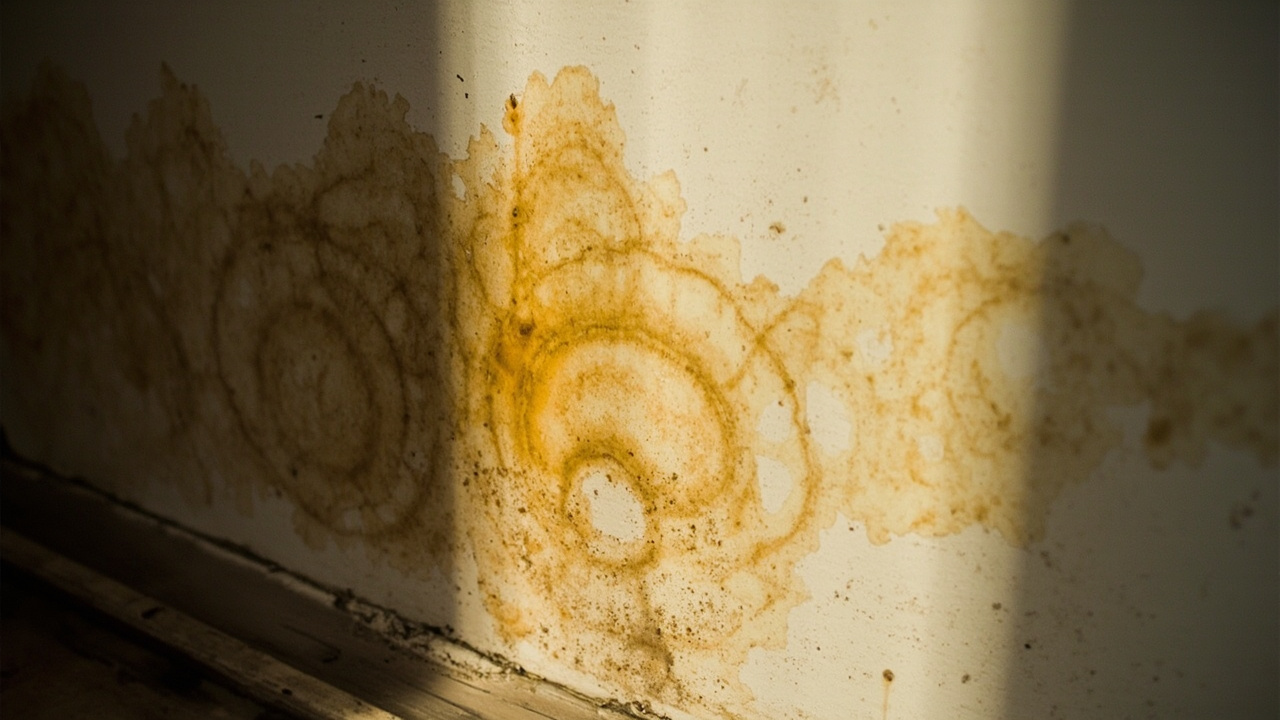
Water stains typically appear as discolored patches ranging from yellow-brown to rust-colored or grayish, depending on the water source and minerals present. Fresh stains may look darker or wet at the edges, while old stains show defined rings where water evaporated. You might see spreading patterns that follow gravity or framing pathways. In Philadelphia's brick rowhomes, stains often appear near exterior walls or ceiling corners. Severe cases show texture changes, bubbling paint, or visible mold spots. Ceiling stains frequently indicate roof or plumbing leaks from above.

How to tell if mold is behind drywall? +

Check for musty odors even when you cannot see growth, as mold often colonizes the hidden side first. Look for discoloration, dark spots, or fuzzy texture breaking through paint. Wall surfaces may bow outward from moisture swelling. If you had water intrusion that stayed wet longer than 48 hours, assume mold is present in Philadelphia's climate. Professional testing involves cutting small inspection holes or using moisture meters and air sampling. Visible staining, combined with high moisture readings, strongly suggests hidden contamination requiring removal, not just surface cleaning.

Do I need to replace water stained drywall? +

Replace water-stained drywall if it remained wet beyond 48 hours, shows structural compromise like softness or crumbling, has visible mold growth, or was exposed to contaminated water. Philadelphia's humidity accelerates deterioration, so waiting makes damage worse. If the stain is purely cosmetic on otherwise sound, dry material, you can treat and repaint. However, hidden moisture behind the surface often goes undetected. Professional moisture assessment determines the extent of damage. Cutting corners by covering up compromised drywall leads to indoor air quality problems and costly repairs later.

How Philadelphia's Rowhome Construction Complicates Water Stain Diagnosis

Philadelphia's attached rowhome design creates unique water intrusion pathways that do not exist in detached single-family homes. Shared party walls between units lack exterior cladding on the dividing surface, so moisture from a neighbor's plumbing leak can migrate laterally through masonry or wood framing and appear as brown water spots on walls inside your home. The source may be 15 feet away in an adjacent unit. Flat or low-slope roofs common on Philadelphia rowhomes also drain more slowly than pitched roofs, allowing water to pool around parapet walls and penetrate through deteriorated flashing. This creates ceiling stains in top-floor units that homeowners mistake for attic condensation when the real cause is exterior water intrusion at the roof perimeter.

Local expertise matters when diagnosing moisture discoloration on sheetrock in Philadelphia's older housing stock. Contractors unfamiliar with the city's construction methods often misidentify party wall moisture as interior condensation and recommend dehumidifiers instead of fixing the actual plumbing or roof leak. This wastes time and allows water damage to spread. Reliance Water Damage Restoration Philadelphia has worked in every neighborhood from Fishtown to West Philadelphia. We know how water moves through brick rowhomes, understand the common failure points in 1920s plumbing systems, and recognize when yellow stains on drywall indicate a problem originating outside your unit. This local knowledge saves you money by identifying the correct source immediately.

Water Damage Restoration Services in The Philadelphia Area

View our service area to see how Reliance Water Damage Restoration delivers fast, reliable support across the region. Whether it’s residential basements or commercial spaces, our team is locally based and ready to respond 24/7. We’re committed to being near you when emergencies strike—count on us for prompt, professional care.
(80 words)

Address:
Reliance Water Damage Restoration Philadelphia, 100 N 18th St, Philadelphia, PA, 19103

Additional Services We Offer

Our news updates

Latest Articles & News from The Blogs

Identifying moisture problems in the unique limestone foundations of Swarthmore homes If you own a historic home in Swarthmore you…

Identifying moisture problems in the unique limestone foundations of Swarthmore homes

Identifying moisture problems in the unique limestone foundations of Swarthmore homes If you own a historic home in Swarthmore you…

Can your custom built-in bookshelves in Radnor be saved after a pipe burst?

Can Your Custom Built-In Bookshelves in Radnor Be Saved After a Pipe Burst? Water damage to custom built-ins in Radnor…

Solving the mystery of office park leaks in Plymouth Meeting before they ruin the carpet

Solving the mystery of office park leaks in Plymouth Meeting before they ruin the carpet Office park leaks in Plymouth…

Contact Us

Do not let water stains spread. Call Reliance Water Damage Restoration Philadelphia at (215) 610-8188 for same-day moisture assessment and permanent repair solutions. We identify the source, stop the damage, and restore your walls correctly.