menu

Warehouse Flood Restoration in Philadelphia – Minimize Downtime and Protect Your Operations

Industrial-grade flood remediation for distribution centers and commercial facilities across Philadelphia, engineered to restore operations quickly and meet stringent code requirements while protecting inventory and equipment from secondary damage.

Slider Image 1
Slider Image 2
Slider Image 3
Slider Image 4
Slider Image 5
Slider Image 7
Slider Image 8
Slider Image 9
Slider Image 10
Slider Image 11

Why Warehouse Flooding Demands Immediate Industrial-Grade Response

Philadelphia's location along the Delaware and Schuylkill Rivers creates significant flood risk for industrial facilities, particularly in the Port Richmond and Passyunk neighborhoods where many warehouses operate near sea level. When a 200,000-square-foot distribution center floods, you face liability exposure, inventory loss, and operational shutdown that costs thousands per hour.

Warehouse flood restoration differs fundamentally from residential water damage cleanup. You need commercial-grade extraction equipment capable of removing tens of thousands of gallons, industrial dehumidifiers designed for high-bay spaces, and technicians who understand forklift staging areas and OSHA compliance requirements.

Philadelphia's aging industrial infrastructure compounds the problem. Many warehouses in Kensington and Bridesburg occupy century-old buildings with outdated drainage systems. When these facilities flood from roof failures, sprinkler malfunctions, or storm surge, contaminated water spreads across loading docks and penetrates floor drains, requiring specialized commercial flood remediation protocols.

The commercial consequences extend beyond immediate damage. Delayed industrial water damage cleanup leads to concrete spalling, steel corrosion, and inventory contamination that triggers insurance disputes. Philadelphia's humidity creates aggressive mold growth within 48 hours, particularly in climate-controlled storage areas. Distribution center water removal demands speed and capacity that residential equipment cannot match.

Your warehouse cannot afford extended downtime. Every hour offline disrupts supply chains, violates customer contracts, and erodes competitive position. Industrial flood recovery requires providers who understand business continuity planning and can coordinate around your operational schedule.

Why Warehouse Flooding Demands Immediate Industrial-Grade Response
How Professional Warehouse Water Mitigation Works

How Professional Warehouse Water Mitigation Works

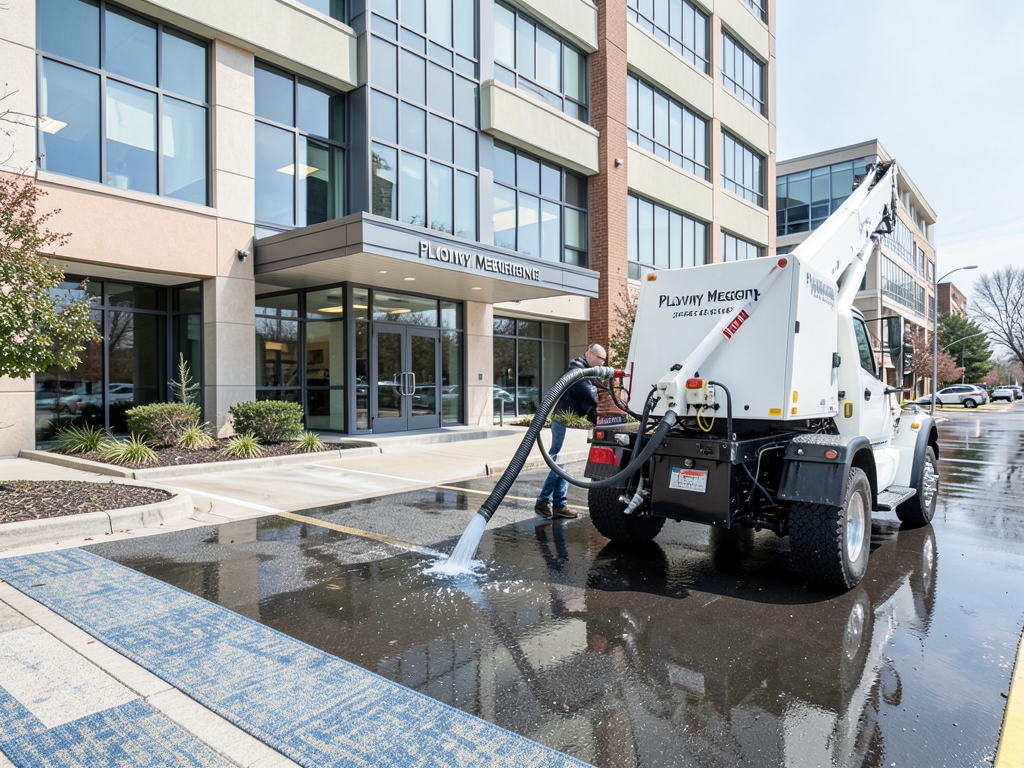
Warehouse water mitigation begins with rapid deployment of industrial extraction equipment. We position truck-mounted extractors and trailer-mounted dehumidifiers that move 3,000 CFM through high-bay spaces. This approach removes standing water faster than portable units while addressing vapor pressure differentials that drive moisture into concrete slabs and mezzanine structures.

We map facility zones by contamination category. Clean water from sprinkler discharge receives different treatment than Category 3 water from sewer backups or river flooding. Philadelphia facilities near the Navy Yard and Airport often face floodwater contaminated with petroleum products and industrial runoff, requiring antimicrobial treatment and specialized disposal procedures that meet EPA and Pennsylvania DEP standards.

Our technicians understand warehouse operations. We coordinate water removal around inventory staging, protect critical equipment with temporary barriers, and establish dehumidification zones that maintain climate control for temperature-sensitive goods. When working in active facilities, we schedule extraction during off-shifts and use low-profile equipment that accommodates forklift traffic patterns.

Documentation drives commercial flood remediation. We photograph damage progression, log moisture readings across grid patterns, and maintain chain-of-custody records for contaminated materials. This data supports insurance claims and demonstrates compliance with Philadelphia L&I requirements for commercial properties. Third-party hygienists verify air quality before we certify spaces ready for reoccupancy.

Structural drying in warehouse environments demands different approaches than residential work. Concrete slab foundations in Philadelphia warehouses sit on compacted fill that retains moisture for weeks. We use thermal imaging to track subsurface moisture migration and install injection drying systems that force warm air through concrete pores, accelerating evaporation without disrupting operations overhead.

How We Execute Industrial Flood Recovery

Warehouse Flood Restoration in Philadelphia – Minimize Downtime and Protect Your Operations
01

Emergency Response Mobilization

Within two hours of your call, our crew arrives with commercial extraction equipment and begins damage assessment. We establish command posts, identify safety hazards, and shut off compromised systems to prevent additional flooding. Our initial survey maps water distribution patterns and categorizes contamination levels, creating the action plan that drives all subsequent restoration activities.
02

Industrial Water Extraction

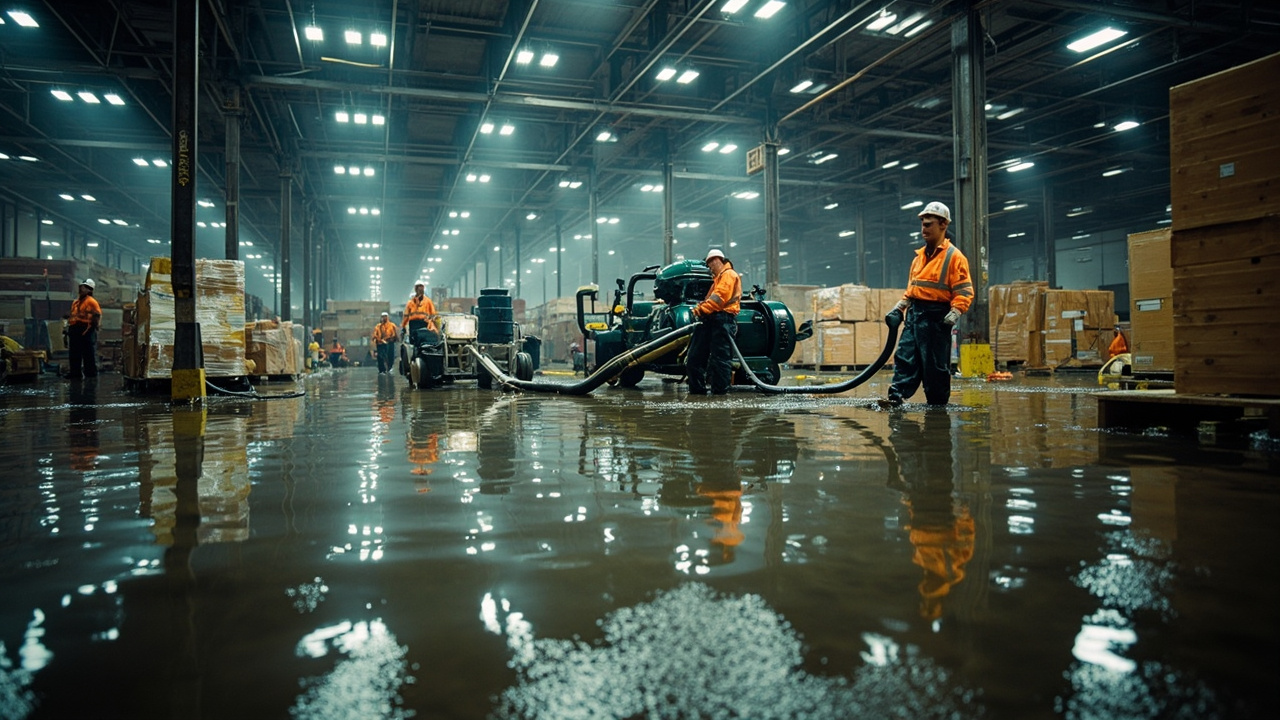
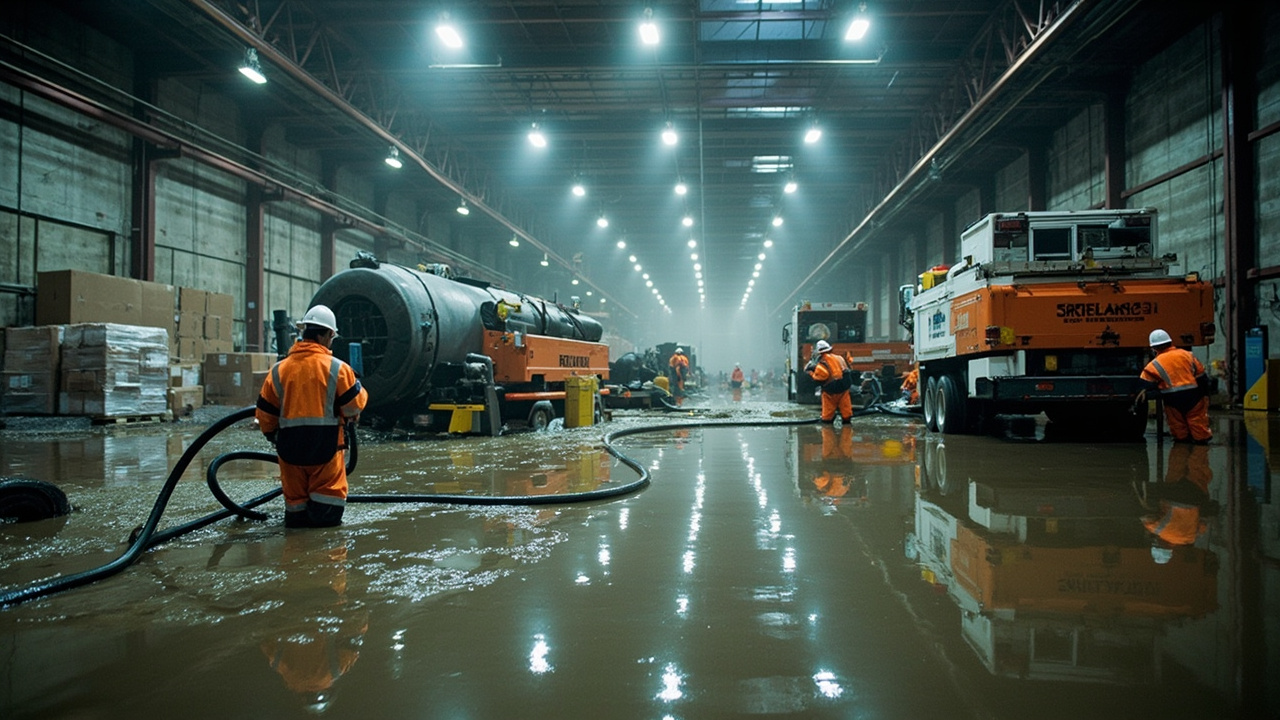
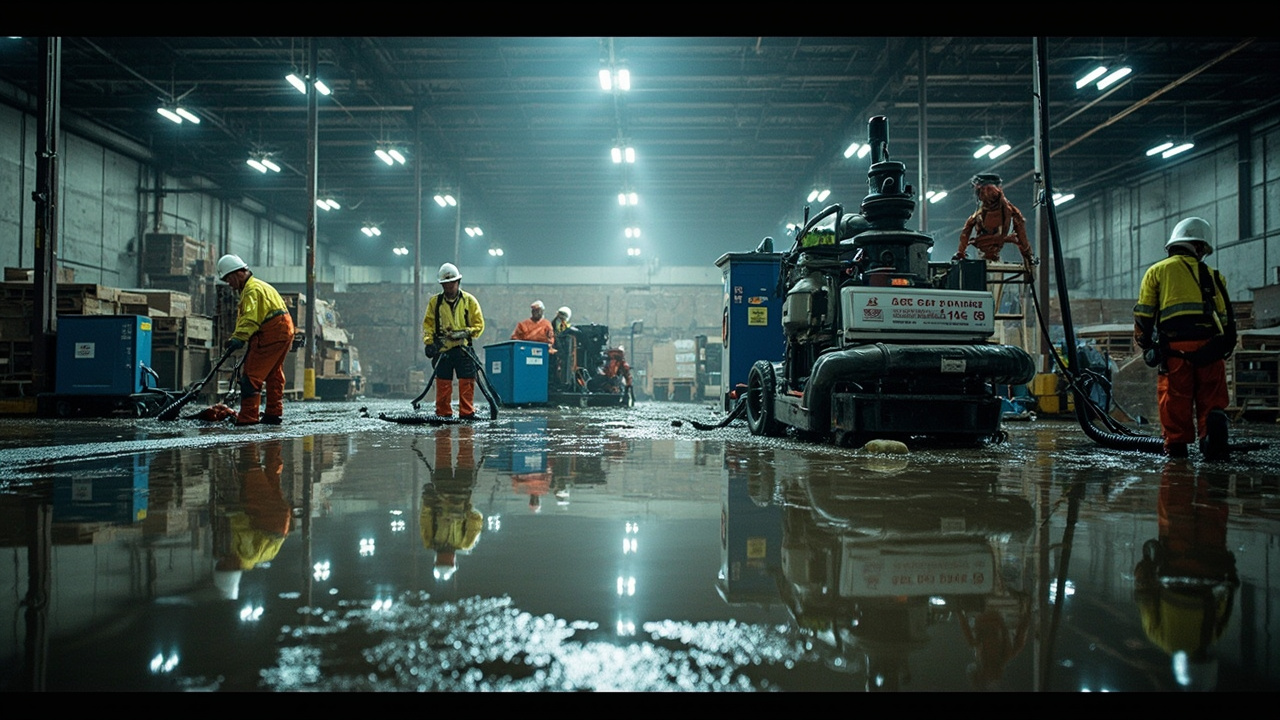
Truck-mounted pumps remove standing water at rates exceeding 200 gallons per minute, while trailer-mounted dehumidifiers process millions of cubic feet per hour. We stage equipment to minimize interference with your operations, protect salvageable inventory with moisture barriers, and extract water from floor trenches and loading dock pits where standing water concentrates. Air movers create controlled airflow patterns that accelerate surface drying without spreading contaminants.
03

Structural Drying and Verification

We monitor moisture levels in walls, floors, and structural elements using calibrated meters, adjusting equipment placement as readings decline. Thermal imaging confirms subsurface drying progress. When moisture content reaches acceptable levels per IICRC S500 standards, third-party testing verifies air quality. We provide detailed documentation showing your facility meets code requirements and is ready for full operations, supporting your insurance claim and regulatory compliance.

Why Philadelphia Warehouses Choose Reliance Water Damage Restoration Philadelphia

Philadelphia's industrial corridor demands restoration providers who understand commercial risk management. Reliance Water Damage Restoration Philadelphia maintains relationships with industrial hygienists, structural engineers, and commercial insurance adjusters who regularly work in Philadelphia facilities. We speak the language of risk managers and safety directors, not just property managers.

Our equipment inventory matches the scale of warehouse flooding. We maintain truck-mounted extraction systems, industrial dehumidifiers rated for spaces exceeding 50,000 square feet, and air scrubbers designed for contaminated environments. When a facility in Holmesburg or Tacony floods, we deploy the capacity needed to restore operations within days, not weeks.

Philadelphia's building codes for commercial properties differ from residential requirements. We understand Chapter 34 of the Philadelphia Property Maintenance Code and coordinate inspections with L&I when structural elements require evaluation. Our documentation meets the standards commercial insurers demand, reducing claim disputes and accelerating payment.

Local knowledge prevents costly mistakes. We know which Philadelphia neighborhoods face combined sewer overflow during heavy rain, which industrial parks sit in FEMA flood zones, and which warehouse districts experience frequent water main breaks. This familiarity allows us to anticipate secondary damage and implement preventive measures that protect your facility beyond immediate restoration.

We work around your schedule. Distribution centers and warehouses operate 24/7 with tight logistics windows. We coordinate water removal during off-shifts, stage equipment to maintain forklift access, and establish drying zones that allow partial operations while restoration continues. Your business continuity drives our project planning, not our convenience.

Capacity matters during emergencies. We maintain crews, equipment, and supplier relationships that scale to multi-building incidents. When several Philadelphia warehouses flood simultaneously during severe weather, we have the resources to respond comprehensively rather than prioritizing one client over another.

What to Expect During Commercial Flood Remediation

Response Time and Equipment Deployment

We dispatch crews within two hours of initial contact, arriving with commercial-grade extraction equipment and assessment tools. Emergency response operates around the clock because warehouse flooding does not wait for business hours. Our trucks carry industrial pumps, dehumidifiers sized for high-bay spaces, and safety equipment required for contaminated water environments. We begin water removal immediately while conducting detailed damage assessment. Equipment staging considers your operational needs, maintaining access to critical areas while establishing effective drying zones. Initial extraction typically removes standing water within the first 24 hours, with structural drying continuing for several days depending on facility size and materials affected.

Comprehensive Facility Assessment

Our technicians map water distribution throughout your facility, identifying affected structural elements, inventory zones, and equipment. Thermal imaging cameras detect hidden moisture in walls, under flooring, and within insulation. We classify water by contamination category, determining which areas require antimicrobial treatment and which materials must be removed rather than dried. Moisture meters establish baseline readings that guide the drying process and verify completion. This assessment produces detailed documentation with photographs, floor plans marked with affected areas, and moisture logs. We provide this data to your insurance adjuster immediately, supporting faster claim processing. Assessment continues throughout restoration as we monitor drying progress and adjust equipment placement.

Operational Restoration and Business Continuity

The goal extends beyond removing water. We restore your facility to operational status while protecting undamaged areas from secondary contamination. Temporary barriers isolate affected zones, allowing partial operations during restoration. Equipment placement maintains forklift paths and loading dock access. We coordinate drying schedules around your logistics requirements, positioning loud equipment during off-shifts when possible. Clean, dry air circulation prevents mold growth that would require extended closures. Final verification includes moisture testing, air quality sampling, and structural evaluation to confirm your facility meets code and insurance requirements. We provide certification that your space is ready for full operations, supporting your liability protection and regulatory compliance.

Documentation and Insurance Coordination

Commercial claims demand thorough documentation. We photograph damage before, during, and after restoration, maintaining time-stamped records that support your claim. Moisture logs track drying progress across multiple days, demonstrating professional mitigation that reduces claim costs. Equipment logs show deployment dates and locations, verifying charges. We communicate directly with your adjuster, providing technical data that expedites approval. Material disposal manifests document contaminated waste removal per EPA requirements. Final reports include air quality testing results and moisture verification readings. This documentation protects you during claim disputes and demonstrates compliance with Pennsylvania commercial property regulations. We maintain records for seven years, providing access if questions arise during policy renewals or property transactions.

Frequently Asked Questions

You Have Questions,
We Have Answers

What's the difference between remediation and restoration? +

Remediation removes contamination and stabilizes damage. This includes water extraction, antimicrobial treatment, and drying. Restoration rebuilds your warehouse to pre-loss condition. This includes structural repairs, drywall replacement, flooring installation, and electrical work. In Philadelphia warehouses, remediation might take 3-5 days while full restoration can take weeks depending on the extent of structural damage. Most commercial policies cover both phases, but insurers typically require documented completion of remediation before authorizing restoration expenditures. For properties in flood-prone areas near the Delaware River, proper remediation prevents mold growth in Philadelphia's humid climate, which can delay or complicate the restoration phase.

How do restoration companies get paid? +

Most restoration companies bill directly through your commercial insurance carrier. The process starts with an adjuster inspection and scope agreement. Companies submit estimates, perform work, then invoice the carrier. Some require a deductible payment upfront. For large commercial warehouse losses in Philadelphia, many companies offer direct billing arrangements to minimize your out-of-pocket costs and preserve cash flow. If you lack coverage or have a coverage gap, companies bill you directly. Payment terms vary, but many offer net-30 arrangements for established businesses. Always request a detailed line-item estimate before authorizing work. This protects you from scope creep and ensures transparency throughout the restoration timeline.

Who is the alternative to SERVPRO? +

Several professional restoration companies operate in Philadelphia beyond franchise models. Local independent firms often provide faster response times and personalized service for warehouse facilities. These companies carry the same certifications, use identical equipment, and follow IICRC standards. Many Philadelphia business owners prefer local operators because they understand regional building codes, have established relationships with city inspectors, and can navigate permit requirements faster. When selecting a restoration partner for your warehouse, verify they carry commercial general liability insurance, workers compensation coverage, and maintain 24-hour emergency response capabilities. Ask for references from other warehouse or industrial clients in the Philadelphia metro area before committing.

Is water damage restoration worth it? +

Water damage restoration is essential for commercial warehouses. Unaddressed water damage leads to structural deterioration, mold growth, inventory loss, and liability exposure. In Philadelphia's climate, water-damaged buildings can develop mold within 48 hours. The cost of restoration is typically far less than the cost of business interruption, lost inventory, potential lawsuits from injured workers, or building condemnation. Commercial properties must meet occupancy codes. Water-damaged electrical systems, compromised structural members, or mold growth can trigger violations that shut down operations. Insurance covers most restoration costs after your deductible. Delaying restoration increases total loss costs exponentially. Act within 24 hours to minimize damage and preserve your claim.

What are the three types of remediation? +

The three remediation categories are source removal, containment, and encapsulation. Source removal eliminates contaminated materials like water-damaged drywall or insulation. This is the preferred method for warehouse floods. Containment isolates affected areas using barriers and negative air pressure to prevent contamination spread. This protects undamaged inventory and operational zones. Encapsulation seals contamination when removal is impractical, though this is rarely appropriate for commercial flood scenarios. Philadelphia warehouses typically require source removal due to the extent of water intrusion and the need for complete structural drying. Proper remediation prevents secondary damage, reduces liability, and ensures code compliance. Insurance adjusters expect documented remediation protocols before approving restoration costs.

What are the 3 R's of recovery? +

The three R's of disaster recovery are Response, Remediation, and Restoration. Response involves immediate actions like water extraction, emergency power, and damage assessment. Speed matters here. Remediation stabilizes the environment through drying, dehumidification, and contamination removal. Restoration rebuilds the facility to operational condition. For Philadelphia warehouses, effective response within 4 hours significantly reduces total loss costs. The compressed timeline matters because business interruption costs accumulate daily. Each phase requires documentation for insurance claims. Response and remediation often overlap in commercial settings where minimizing downtime is critical. Companies that execute all three phases efficiently reduce your total recovery time and preserve business continuity.

Do you need a license for restoration? +

Pennsylvania does not require a specific restoration license, but legitimate companies carry multiple credentials. Look for IICRC certification, which establishes industry competency standards. Commercial restoration contractors need a Pennsylvania Home Improvement Contractor registration for structural work. In Philadelphia, companies must obtain permits for electrical, plumbing, and structural repairs. Verify your restoration contractor carries commercial general liability insurance and workers compensation coverage. For warehouses exceeding certain square footage, some restoration work may require licensed tradespeople for specific tasks. Always verify credentials before signing contracts. Unlicensed operators create liability exposure and may void your insurance coverage if work does not meet code requirements.

What not to say to claim adjuster? +

Never admit fault, speculate about damage causes, or exaggerate losses. Avoid saying your maintenance was deferred or that you knew about pre-existing conditions. Do not accept initial settlement offers without review. Never sign a release without reading it completely. Do not discuss business interruption losses without documentation. Avoid emotional language. Stick to facts. In Philadelphia, commercial adjusters look for coverage exclusions and policy limits. They are not your advocate. Provide requested documentation promptly but do not volunteer information beyond what is asked. Consider hiring a public adjuster for losses exceeding $100,000. Document everything in writing. Record conversations if Pennsylvania's one-party consent law permits.

Do restoration companies make good money? +

Restoration is a profitable industry with strong margins on emergency services and large commercial projects. Companies balance high overhead costs including equipment, vehicles, insurance, and 24-hour staffing against project revenue. Warehouse floods generate substantial revenue due to project scale, equipment requirements, and extended timelines. Most work is insurance-funded, providing reliable payment. However, profitability depends on operational efficiency, claim management expertise, and minimizing callbacks. In Philadelphia, companies that specialize in commercial and industrial work typically achieve better margins than residential-focused operators. Success requires significant capital investment and expertise. For business owners, this profitability ensures qualified companies remain available for emergency response when you need them.

Who is the biggest restoration company? +

SERVPRO and Paul Davis are among the largest national restoration franchises by location count. BMS CAT and BELFOR dominate large commercial and catastrophic loss restoration. However, size does not determine the best fit for your Philadelphia warehouse. Large national companies offer broad resources but may lack local responsiveness. Regional companies often provide faster mobilization, personalized service, and better knowledge of Philadelphia building codes and permit processes. For commercial warehouse restoration, evaluate companies based on commercial experience, equipment capacity, emergency response time, and insurance carrier relationships. Request references from similar facilities in the Philadelphia metro area. The right restoration partner matches your facility size and operational requirements.

How Philadelphia's River Proximity Increases Warehouse Flood Risk

Philadelphia's industrial districts developed along the Delaware and Schuylkill Rivers, placing thousands of warehouse facilities within FEMA-designated flood zones. Port Richmond, Bridesburg, and the Navy Yard area face regular inundation threats during nor'easters and tropical storms. The city's aging combined sewer system compounds the problem, with storm surges forcing sewage backup into low-lying facilities. Many Philadelphia warehouses occupy pre-1950 buildings designed before modern flood mitigation standards existed, with floor elevations below current base flood elevation requirements. This geography makes industrial flood recovery capabilities essential for facility operators, not optional disaster planning.

Philadelphia commercial property owners face specific L&I requirements when flood damage affects structural elements or electrical systems. Restoration must meet current building code even when repairing older facilities, triggering compliance upgrades that inexperienced contractors miss. Local providers understand these requirements and coordinate inspections proactively, preventing project delays and additional violations. We work regularly with Philadelphia commercial insurance adjusters who know which documentation L&I demands and which restoration approaches satisfy both code compliance and insurance standards. This local expertise prevents the costly mistakes that occur when national franchise operations attempt commercial flood remediation without understanding Philadelphia's regulatory environment.

Water Damage Restoration Services in The Philadelphia Area

View our service area to see how Reliance Water Damage Restoration delivers fast, reliable support across the region. Whether it’s residential basements or commercial spaces, our team is locally based and ready to respond 24/7. We’re committed to being near you when emergencies strike—count on us for prompt, professional care.
(80 words)

Address:
Reliance Water Damage Restoration Philadelphia, 100 N 18th St, Philadelphia, PA, 19103

Additional Services We Offer

Our news updates

Latest Articles & News from The Blogs

Identifying moisture problems in the unique limestone foundations of Swarthmore homes If you own a historic home in Swarthmore you…

Identifying moisture problems in the unique limestone foundations of Swarthmore homes

Identifying moisture problems in the unique limestone foundations of Swarthmore homes If you own a historic home in Swarthmore you…

Can your custom built-in bookshelves in Radnor be saved after a pipe burst?

Can Your Custom Built-In Bookshelves in Radnor Be Saved After a Pipe Burst? Water damage to custom built-ins in Radnor…

Solving the mystery of office park leaks in Plymouth Meeting before they ruin the carpet

Solving the mystery of office park leaks in Plymouth Meeting before they ruin the carpet Office park leaks in Plymouth…

Contact Us

Warehouse flooding threatens your business continuity and liability position. Every hour counts. Call (215) 610-8188 now for immediate deployment of industrial-grade extraction equipment and experienced commercial restoration crews. We answer 24/7 because your operations cannot wait.